This store requires javascript to be enabled for some features to work correctly.

Contemporary craftsmanship since 1968

Apostrophe is a French wardrobe house, founded on a family heritage, guided by timeless design and animated by three generations of quiet strength and enduring vision.

  • HISTORY

  • CONCEPT

  • VALUE

60 years of parisian know-how in motion.

Mr. Gilbert Hazan in front of his first shop, 1956. Apostrophe Archives.

1956

Before everything begins: the vision before the name.

In this small shopfront in Algeria, the origin was born — where Gilbert and Renée Hazan silently laid the foundations of values ​​that would pass through generations.

Long before the house had a name, its spirit already existed: precision of gesture, clothes designed for everyday life, and family as its beating heart.

The focus was on the suits and denim — pieces executed with precision, worn day after day.

The first expression of a commitment destined to last.

In this small shopfront in Algeria, the origin was born — where Gilbert and Renée Hazan silently laid the foundations of values ​​that would pass through generations.

Long before the house had a name, its spirit already existed: precision of gesture, clothes designed for everyday life, and family as its beating heart.

The focus was on the suits and denim — pieces executed with precision, worn day after day.

The first expression of a commitment destined to last.

1962

Resilience in Transition: Paris, 1962.

During the Algerian War, the family settled in France, without possessions or certainties. They started selling chocolate.
It wasn't their profession, but it was their path.

A discreet act of reinvention, born of necessity and guided by resilience.

Mr. Gilbert Hazan with his family, 1962. Apostrophe Archives.

Mr. Gilbert Hazan, 1968, Paris. Apostrophe Archives. © All rights reserved.

1968

The revival: the founding of Apostrophe.

In 1968, Mr. and Mrs. Hazan returned to their original expertise: design. They launched Apostrophe, producing and distributing collections for major retailers such as Galeries Lafayette — clothing born from genuine demand.

These partners become both a source of support and a reflection, their best-selling products confirming what the founders already suspected.
Each piece reflected the taste and the era, outlining the original DNA of Apostrophe.

In 1968, Mr. and Mrs. Hazan returned to their original expertise: design. They launched Apostrophe, producing and distributing collections for major retailers such as Galeries Lafayette — clothing born from genuine demand.

These partners become both a source of support and a reflection, their best-selling products confirming what the founders already suspected.
Each piece reflected the taste and the era, outlining the original DNA of Apostrophe.

Mr. and Mrs. Gilbert Hazan, 1968, Paris. Apostrophe Archives.

1968 - 1990

A foundation of bonds: family as an inheritance.

From the earliest years, the family remained at the heart of everything.
The founding duo, along with their children Patrick and Elisabeth, and their aunt Agathe, are involved in every stage of development — each bringing precision and dedication to the expanding business.

Over the course of twenty years, Mr. and Mrs. Hazan established a solid presence in Paris as well as in the provinces.
They remained committed to their son Patrick until the 1990s, preparing the transition and perpetuating the legacy of the partnership.

1986

Patrick Hazan: the beginnings of a stylist / between creative know-how and ready-to-wear.

The house was already firmly established — ready for its next chapter.

At just 17 years old, Patrick Hazan — raised in the rhythm of the workshop, trained alongside his parents — felt the natural call to continue the story.
More than a legacy, it carries a vision: to dress the modern woman — free, confident, constantly evolving.

Returning from the United States, where he met iconic figures like Andy Warhol, Jean-Paul Goude and Jean-Baptiste Mondino, he came back imbued with influences that silently refined his sensitivity.

In his own words, he begins with the material — as a sculptor would — imagining a resolutely modern and emancipated woman.
Her creations play on the masculine-feminine balance for cosmopolitan nomads, blending elegance, ease and sophistication in each piece.

Patrick Hazan, 1986, France.

Two dresses from the White Collection. Featured in Air France Madame magazine.

1986

The challenge of silk: the birth of the white dress.

In just five days, Patrick Hazan conceived what would become a pivotal moment for Apostrophe: a collection of white silk dresses, each inspired by and named after a Greek island.
Presented at the Ready-to-Wear Show, it met with immediate success. Buyers demanded more, wanting other colours and materials.

But the vision remains intact: white as a concept, silk as an imperative — purity, clarity, intention.
This requirement is not just a creative choice, it reflects a conviction: clothing as a second skin, which begins with the noblest material and enhances the body with clean lines.

The White Collection was born, a timeless signature of the house.

1987

Redefining retail: Patrick's vision takes root on rue Bonaparte.

Building on the success of the White Collection , Patrick acquired the first Apostrophe boutique on rue Bonaparte, now an iconic address.
At a time when ready-to-wear clothing still largely depended on department stores, this gesture was revolutionary.

Apostrophe then began selling exclusively in its own spaces, allowing a direct and privileged relationship with customers.
A place where the values ​​of the house take shape and are fully experienced.

This step marks the transformation of a strategy focused on wholesale into an independent house, establishing Apostrophe's approach: elegance, timelessness and proximity.

Gap Magazine, 1987. © All rights reserved.

1990

The power of the duo: the second generation of Apostrophe.

In 1990, Patrick married Dominique Hazan, a cultured woman with a strong personality. An economist and gemologist from a family renowned for horse breeding, she brought expertise and heritage to the business. Their union marked the beginning of a solid partnership, both personal and professional.

As a testament to their shared vision, Patrick created Dominique's wedding dress in white silk, echoing the purity of the White Collection , an icon of the house.
The fact that the groom is the designer of the dress becomes a symbol, passed down to future generations.

Under their leadership, the house opened itself to new expertise, bringing a fresh perspective while respecting the traditions of Apostrophe.

Patrick and Dominique Hazan – personal archive

Published in Style magazine, 1995

Painting of the race with the iconic red and blue cap, preserved in the family for generations. Apostrophe Archives.

1995

Guardians of charm: equestrian heritage.

With Dominique's arrival in 1995, Apostrophe entered a new chapter. Her deep ties to the equestrian world and her academic expertise enriched the brand's DNA. She brought structure to Patrick's creativity, forming a powerful duo that blended tradition and fresh energy, redefining the future of the brand.

From this equestrian heritage comes a wardrobe imbued with strength and lightness: structured yet fluid, noble yet discreet.
Iconic pieces — suede trousers, short jackets and suits, silk scarves — embody this vision, combining refined craftsmanship and subtle freedom of movement.

learn more

Patrick Hazan with Fairy Star, Normandy personal archive

A cashmere goat from Mongolia, given to Patrick Hazan's daughter.

1996

The infinite shades of cashmere: once again, a pioneer.

During a sourcing trip to Mongolia, Patrick sought out the finest cashmere, directly from the farm, and demanded bold, vibrant colors—rare and innovative at a time when neutral tones dominated the market. Apostrophe thus became one of the first houses to introduce vibrant hues into luxury knitwear.

A symbol of this pioneering spirit, he brings back a cashmere goat for his daughter — a gift embodying the house's commitment to quality, heritage and the promise of what is to come.

Even today, this philosophy endures: Apostrophe continues to create cashmere pieces celebrated for the richness of their colours and the excellence of their craftsmanship.

1997

Sensuality and matter: the second skin philosophy

In 1997, Patrick Hazan received the Textile Oscar , recognizing his expertise and innovation in the field of fabrics and know-how.

He has always considered his creations to be more sensual than visual : exceptional materials, worked with clean lines, give birth to second-skin garments that enhance the body in its best version — without artifice or exaggeration.

This philosophy remains at the heart of Apostrophe's approach, for timeless and refined clothing.

Patrick Hazan, 1997, Madame Figaro © All rights reserved.

Knight of the Order of Arts and Letters, 2001. Apostrophe Archives

2001

From the workshop to the arts: national recognition.

In 2000, Patrick Hazan was honored with the prestigious title of Chevalier des Arts et des Lettres , one of the highest French distinctions for his contribution to the arts and culture.

This distinction celebrates not only its creative vision, but also its role in elevating French fashion, thanks to Apostrophe's commitment to craftsmanship, innovation and timeless elegance.

This award marks a milestone for the house, affirming its place among French cultural icons and inspiring Patrick — as well as the next generation — to continue pushing the boundaries of creation while honoring the rich heritage of French sartorial tradition.

2015

Modern spirit and respect for tradition: a story worth defending

In 2015, Frédéric Hazan, son of Patrick, became the first representative of the third generation to join Apostrophe. After training abroad and learning the artistic eye at Balmain, he returned with a clear vision: to honor the heritage of the house while guiding it towards the future.

Involved in all departments and gaining a 360° understanding of the company, he laid the groundwork for his future role as CEO. He introduced innovative omnichannel strategies and oversaw the launch of Apostrophe's e-commerce platform. Far more than just an online presence, he positioned the brand within the digital conversation: increasing its visibility on social media, attracting new generations of customers, and strengthening its international presence.

In a constantly evolving world, its mission is clear: to keep Apostrophe in step with its time while projecting its timeless values ​​into the digital age.

For him, it is not just about an inheritance or a succession — in his own words: "It is a story worth defending.

Gilbert, Patrick and Frédéric Hazan (three generations in one photo), 2015, in Paris. © all rights reserved.

2022

The other half of the third generation: shaping the invisible.

In 2022, Laura Hazan, Patrick's daughter, joined the family business, completing the third-generation duo in Apostrophe's history. With experience in business development at WeWork and within the family real estate company, she brings a precise and structured perspective to what is often overlooked.

“I started with what no one talks about,” she recalls—tissue paper, packaging, systems—those silent details that hold a house together. At the same time, she took over the design and production department, shaping the collections with the same balance of precision and sensitivity that defines the brand.

His approach is subtle but essential, reflecting Apostrophe's deep conviction: refinement is felt as much as it is seen.

Patrick and Laura Hazan © All rights reserved

2025

The new chapter: Two visions towards the same horizon

Today, Frédéric and Laura carry the family legacy with renewed clarity: Apostrophe is a way of life, a state of mind, a philosophy , and as its name suggests, a pause in the tumult of modern life, a sign of presence, of something unsaid but essential.

Under their creative and strategic partnership, Apostrophe continues to design wardrobes, not trends — pieces designed to accompany a woman through time and stages of her life, and not just according to the seasons.

They believe there is a moment of calm in every woman's life, when she truly begins to become herself. Apostrophe is there to accompany her , not to transform her, with an elegance that reflects who she already is.

Frédéric and Laura Hazan © All rights reserved

Three generations later, the promise remains: the silent strength of woman, expressed through timeless elegance.


1. The art of the essential

The Alliance of Form and Function


We create only what is necessary — nothing more. Clean silhouettes, high-quality materials, and cuts that serve both form and function. Every piece deserves its place in the wardrobe.

Marhaba magazine, 1990


2. The Wardrobe Workshop

Carefully designed, infinitely customizable.


Each piece is designed according to this philosophy — the collections coordinate and layer naturally, forming cohesive wardrobes rather than an assemblage of isolated elements. The pieces integrate seamlessly into existing wardrobes, offering stylistic versatility and lasting relevance.

The colours follow the same logic — neutral tones, anthracite, white, navy and earth shades make up the base, enhanced by seasonal touches to enrich the composition.


3. Designed to last: timeless and modular pieces

designed to be worn throughout the seasons and stages of life.


We don't redesign simply for the sake of change. Our silhouettes remain consistent, adjusted only when it makes sense. Pieces like the suit collection are reinterpreted, not replaced. Seasonal refinements are complemented by styles in permanent production—clothing that was relevant yesterday and remains so today. This modular structure allows you to build and enrich your wardrobe over time, without ever starting from scratch.


4. Intentional Harmony

Signature Palette, Coordinated Collections

At Apostrophe, the pieces are designed to coexist harmoniously. Each season builds upon the previous one, maintaining a consistency of color, material, and shape — in order to create a wardrobe designed to last.

This approach rests on two pillars:

I: Unity of matter and color


We work with palettes to ensure versatility. The same shade of grey can be used in silk, cashmere, or leather—each interpretation expressing the nature of the material while maintaining the house's signature colours. This method allows pieces to interact between collections, creating visual coherence without uniformity .


II: Trans-collection coordination

The pieces are designed to be worn together beyond their original collection. A vest from one line can naturally be paired with trousers from another, linked by the proportion or complementary nature of the fabrics. The system encourages intentional and lasting combinations, rather than seasonal or isolated ones.


5. Second-skin philosophy

Sensuality through the material.

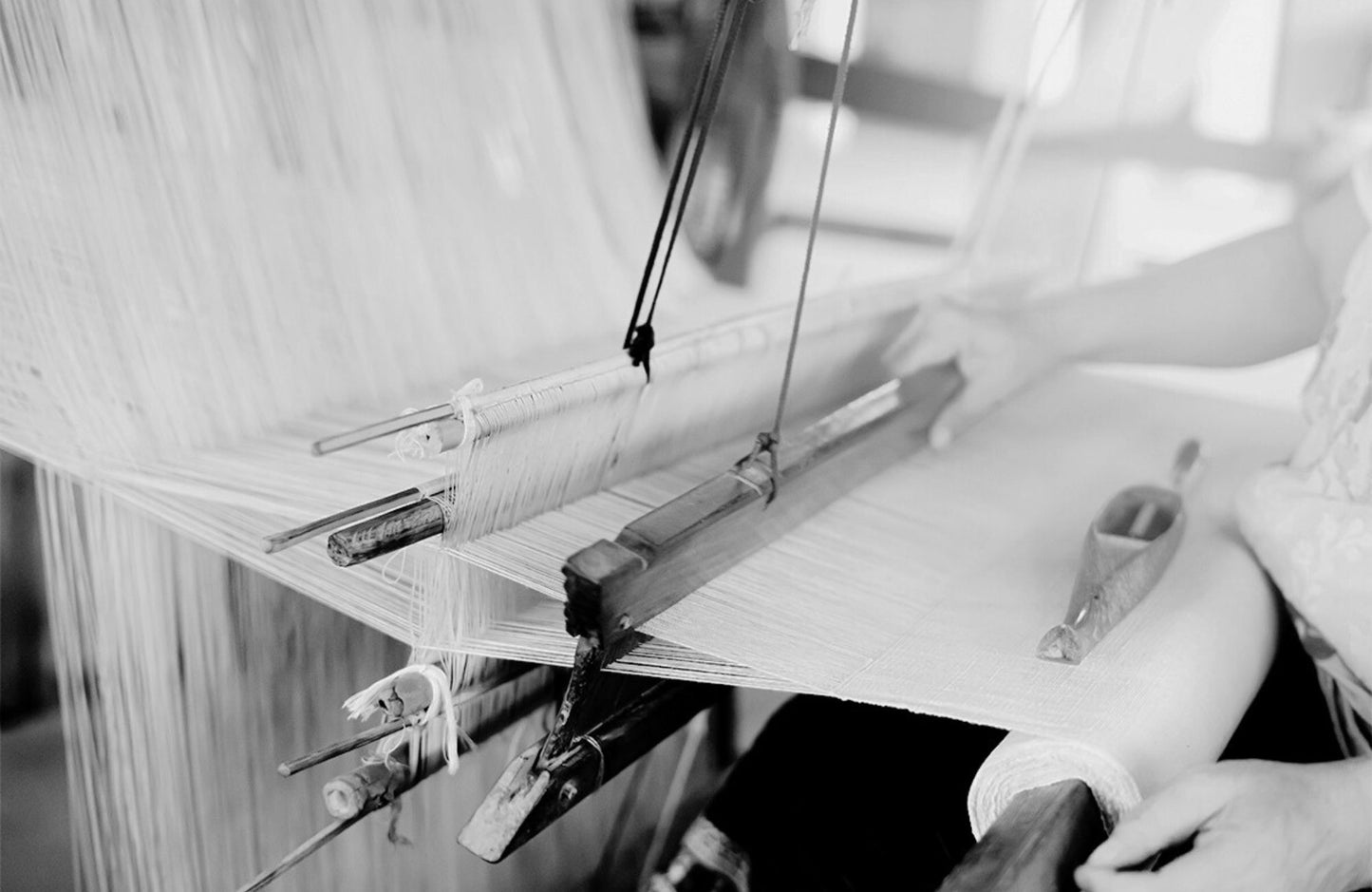
As Patrick said, Apostrophe's fashion is more sensual than visual—touch is the first sense engaged, and the material creates the initial vibration. It begins with a demanding search for the finest materials: Como silk, Biella wool, and cashmere from the Mongolian plateau.

Next, expertise meets artisanal precision. Apostrophe remains loyal to workshops that share this requirement, so that each piece accompanies the body in its movement rather than constraining it, becoming a second skin rather than a simple garment.


6. From the office to brunch

The timeless suit and contemporary freedom.


At the heart of Apostrophe lies an entrepreneurial spirit that celebrates the modern woman—bold, talented, and always on the go. The house designs clothing that combines strength and elegance, conceived to accompany a life punctuated by roles and transitions. The pieces wear effortlessly from day to night, supporting everyday life without compromising on sophistication. The house's signature suit collection embodies this vision: precise, contemporary tailoring designed to enhance self-expression.